
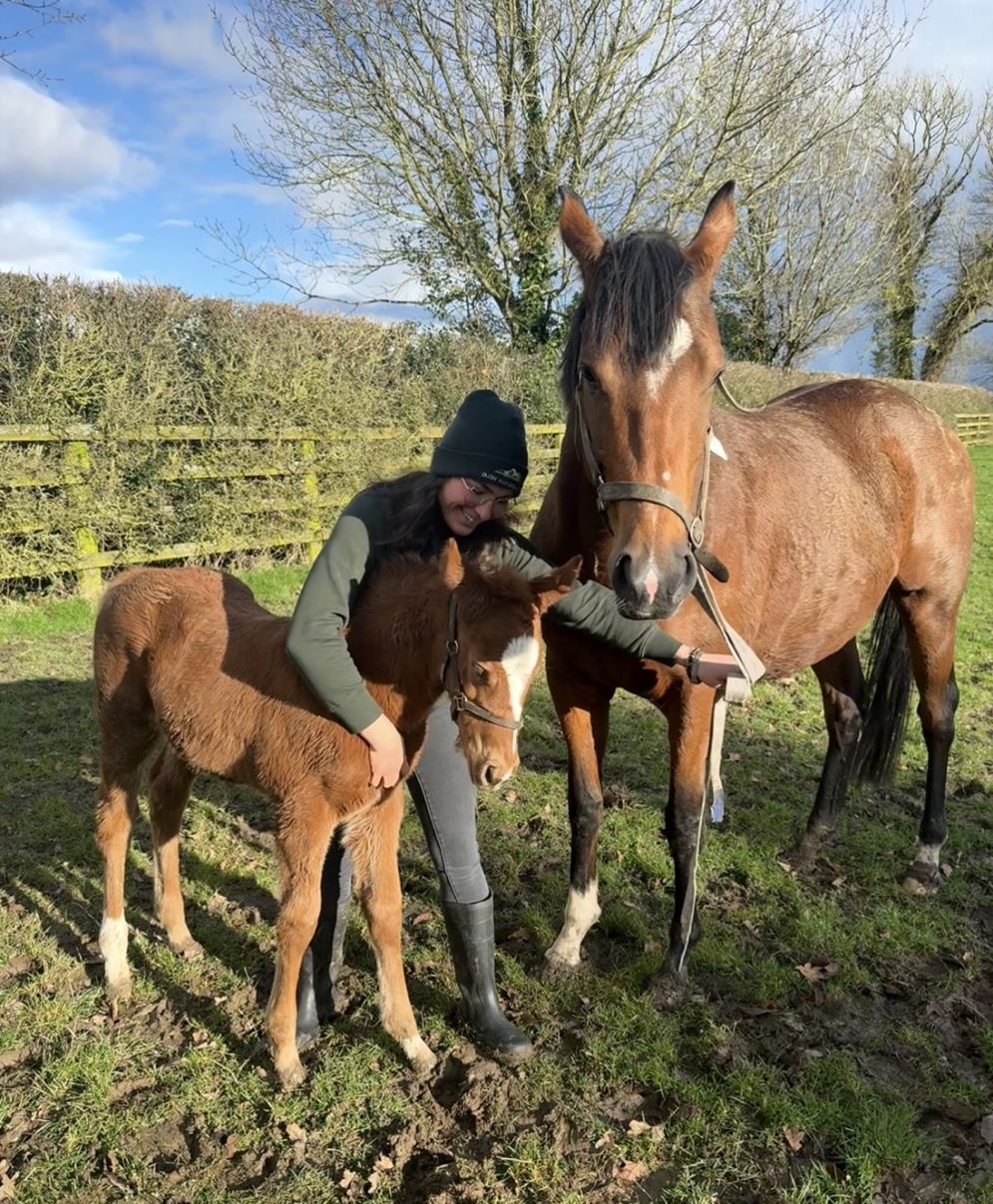
Dylan & Ophélie – Week 3
This week was both rich and interesting, thanks to the hands-on experience we gained and the high quality of the speakers we hosted.
To begin with, Charles O’Neill came to speak about Irish Thoroughbred Marketing and its missions. He presented the various initiatives led by ITM & highlighted the key role the organisation plays in promoting the Irish racing and breeding industry worldwide & also in bringing foreign direct investments.
We then had our third Equine Breeding lecture, focused on the practical aspects of mare reproduction, delivered by Dr Ernan O’Donnell. During this course, we learned about abnormalities that can occur during the mare’s cycle, the different therapeutic options available to address these issues, and the methods used to diagnose pregnancy.
We concluded the week with a lecture on farriery presented by master farrier Martin Leahy. This session was particularly informative and covered the fundamentals of farriery.
Dylan
This week I spent three days in Sun Chariot which is the foaling unit here and I did three shifts on night duty. In Sun Chariot, I got the chance to assist the vet with various jobs like examining newborn foals from the night before and the mares that had given birth.
It was great to gain experience in what the vet looks for in the mare and foal to ensure they are fit and healthy after foaling.
On night shift on arrival, we go around to each mare and assess their condition and their bags so we can monitor how they are progressing. The mares are checked every 15 minutes, these checks are rotated between our supervisor Carol, Hannah & myself. This is to ensure we don’t miss signs of foaling. We look for mares sweating up, acting out of character, running milk and potentially breaking waters.
When the mare breaks waters, we bring them up to foal in a foaling box, where we already have the foaling kit ready. I got to examine the foal presentation during labour to indicate that the foal was coming the correct way, which gave me a much deeper understanding as to how the foal is delivered.
During my time in the foaling box, I witnessed many scenarios & situations that can occur. It was a great opportunity to further my knowledge about foaling and welcome the next potential superstars into the world.
Ophélie
During the week, I worked at both Kildare Yard & Strawhall Yard, under the supervision of Paul and Tina.
Kildare Yard houses mares and foals post-foaling and is where wet mares are returned to teasing after foaling. Six days after foaling, wet mares are teased to stimulate and detect the beginning of the mare’s heat cycle for covering purposes. On Monday, we began teasing the first INS mare to foal this season, and she was teased daily throughout the week. As she showed clear signs of heat, Mr O’Donnell examined her cervix & performed an ultrasound scan. I saw through the speculum what the cervix looks like when a mare is in season and on the scan, I observed the ovarian follicular development, confirming the season. This was particularly interesting, as it allowed me to better understand the teasing program and the clinical examinations carried out post-foaling. Throughout the week, I handled between three and five mares and foals daily. After completing the foal treatments each morning, including cleaning the navels for ten days, the mares & foals were turned out into nursery paddocks for an hour or more, depending on the weather, age of the foals. Handling the foals was really thrilling, because they are sharp and already show signs of temperament at such a young age, which amazes me.
Strawhall Yard accommodates 26 late-term pregnant mares. These mares are turned out daily and brought back in during the afternoon. To detect any abnormalities or signs of close foaling, we were checking the mares’ bags daily. One morning, I assisted the farrier, who taught me a lot about the farriery protocols applied to mares.
HAVE A QUESTION?
Drop a Line
Address
Irish National Stud & Gardens,
Brallistown Little, Tully, Co. Kildare,
R51 AP20, Ireland