
Mark
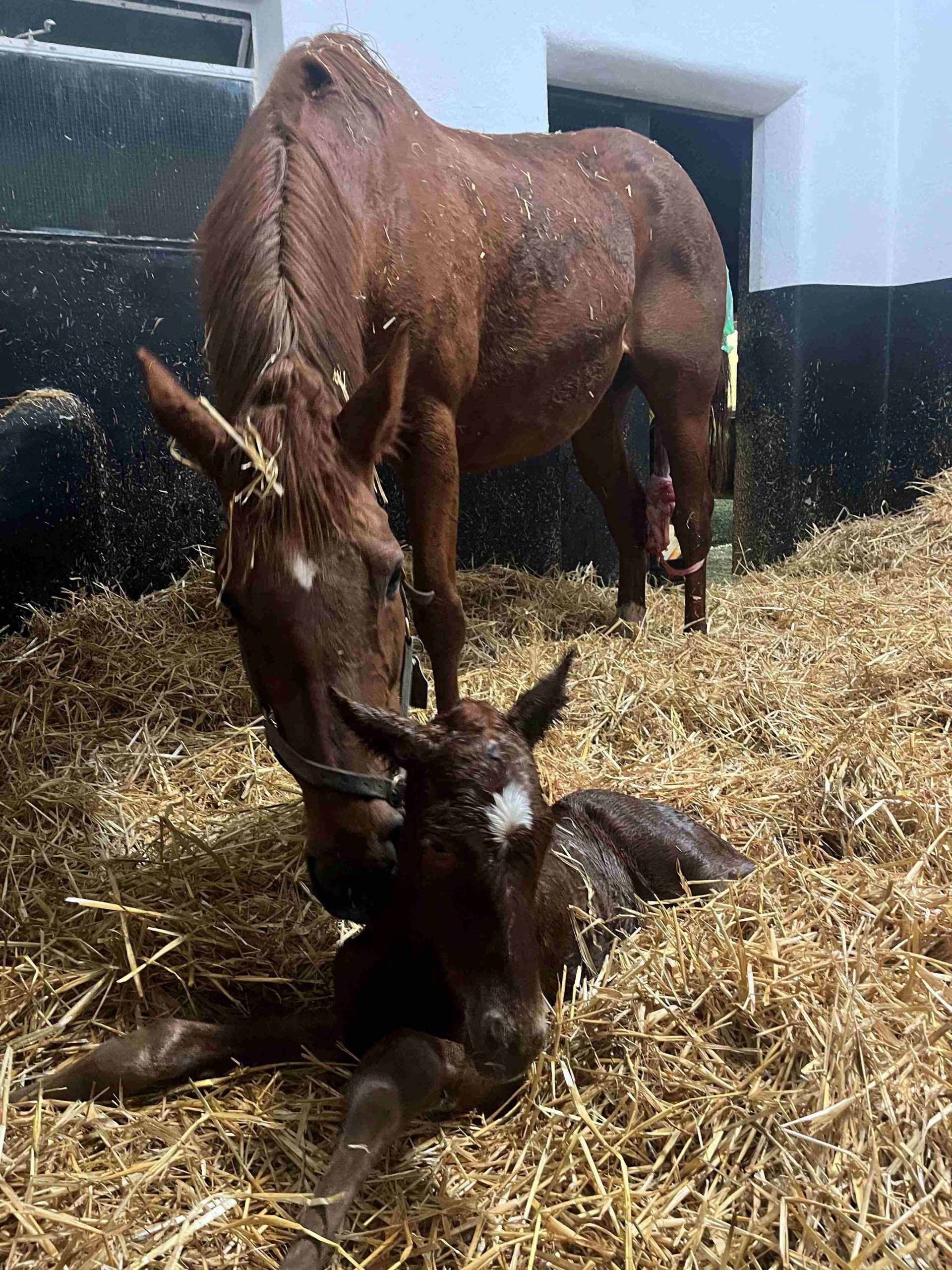
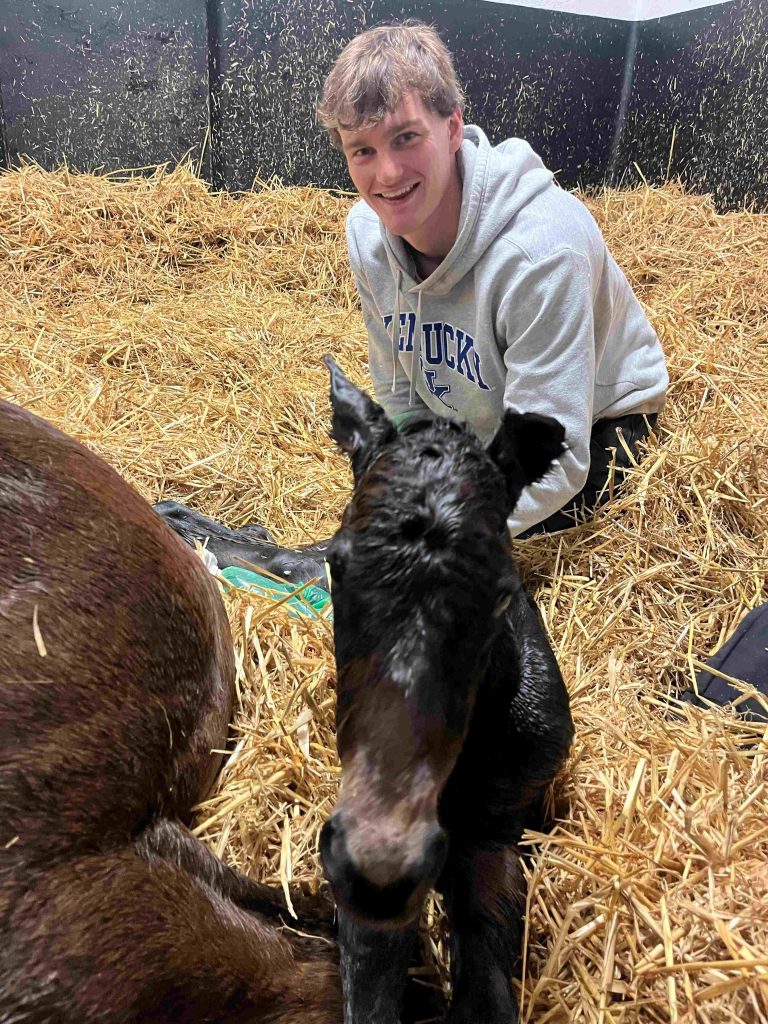
Over the past three weeks I have been working in all sectors of the foaling unit. Catherine and I started on the night shift, where we foaled 5 mares in 3 nights.
During these nights, we are constantly checking mares for signs that foaling is nearby. We are assessing mares for signs of discomfort, keeping an eye on temperatures, which give us an idea when a mare will break water, thus entering stage 2 of parturition.
During the day, while we give mares time outside in the fields, we work thoroughly to clean and disinfect the foaling boxes. Ensuring a clean environment for foaling is very important, as we try to limit the foals’ exposure to bacteria and disease. Having the foaling unit prepped and ready by day makes the night shift run quickly and efficiently.
This week in the classroom, Vincent O’Connor came and discussed all things stallions. We are learning about current stallion practices, reproductive anatomy, and the history of thoroughbred stallions. This paired great with us guest lecture Michelle Fogarty, who does pedigree research for Weatherby’s. She talked to us about the responsibility they have for maintaining the General Stud Book, which dates back to 1791. She also dove into the process of registering foals, matings, and movement of all thoroughbreds across Great Britain and Ireland.
Catherine
I began my week finishing my night shifts with my classmate Mark, where we worked three nights from 6pm to 7am assisting with foaling mares. I thoroughly enjoyed this experience, as it gave me the opportunity to apply the theory I had been learning in lectures to a practical setting. Being hands on in the foaling process significantly deepened my understanding and I found it very rewarding to see this knowledge come to life.
After a nice rest from night shift. I joined the rest of the team in Maddenstown yard on Wednesday. This was my first time in the yard and it is run by Eimear and Jesse. This yard consisted of barren and maiden mares. This was certainly a busy yard, every morning we started with teasing the mares. Each morning a teasing sheet would be filled out. This system was very helpful in tracking their reproductive cycles and identifying when they may be coming back in season. Following this, we turned out some of the mares who weren’t been checked by the vet. When the vet arrived in the morning, we normally scanned the mares that were the closet to being covered. Some mares required flushing which was carried out as needed.
This week we had two lectures from Vincent O’ Connor. On Monday we focused on stallion reproductive anatomy, learning about the different parts and their functions. Wednesday’s lecture was based on castration and the vasectomy of male horses. On Thursday we had a guest lecture from Michelle Fogarty from Weatherby’s. I found this very interesting as she explained the role Weatherby’s plays in preparing pedigrees and supporting sales. This lecture clearly illustrated the importance of accurate record keeping and how pedigrees underpin the entire thoroughbred industry. Overall, I really enjoyed this week it provided me with a great balance between practical experience and theoretical learning.
HAVE A QUESTION?
Drop a Line
Address
Irish National Stud & Gardens,
Brallistown Little, Tully, Co. Kildare,
R51 AP20, Ireland